In the vast and intricate world of amateur radio, antennas often steal the spotlight. From towering yagi arrays to the ubiquitous dipole, these radiating structures are the workhorses that allow us to connect across continents and beyond. Yet, nestled amongst these more prominent designs, lies a truly remarkable and often overlooked antenna: the slot antenna. Far from being a niche curiosity, the slot antenna, when understood and properly implemented, offers a compelling blend of performance, stealth, and versatility that makes it a genuine hidden gem for radio amateurs.
What is a Slot Antenna?
At its core, a slot antenna is the dual of a dipole antenna. Instead of a conductor radiating energy, a slot antenna utilizes a conductive surface with a precisely shaped aperture or slot. When radio waves of the correct frequency encounter this slot, they induce currents in the surrounding metal, causing the slot itself to radiate electromagnetic energy. This concept, while seemingly simple, opens up a world of unique design possibilities and advantageous characteristics.
The Inverse Relationship: Dipole vs. Slot
To truly appreciate the slot antenna, it’s helpful to draw a direct comparison with its more familiar counterpart, the dipole. A dipole antenna consists of two conductive elements, typically wires or rods, aligned end-to-end. When excited by an RF feedline, these elements generate electromagnetic fields and radiate. Conversely, a slot antenna is essentially a dipole “cut out” of a conductive surface. Imagine taking a solid sheet of metal and cutting a precisely sized and shaped slot into it. This slot then acts as the radiating element.
The Fundamental Principle: Aperture Excitation
The excitation mechanism for a slot antenna involves feeding radio frequency energy into the aperture. This is typically achieved by connecting a transmission line across the slot. The voltage difference applied across the slot gap causes charge to oscillate, mimicking the current flow in a dipole and thus generating radiation. The dimensions and shape of the slot are critical and are directly related to the resonant frequency of the antenna, much like the length of a dipole.
Advantages of the Slot Antenna: Why It’s a Hidden Gem

The inherent design of the slot antenna confers several significant advantages that often make it a superior choice in specific ham radio applications. These advantages contribute to its status as a “hidden gem” – often overlooked but highly effective.
Stealth and Concealment
One of the most compelling reasons to consider a slot antenna is its remarkable potential for stealth. Unlike prominent wire antennas or bulky directional arrays, a slot antenna can be integrated into existing structures with minimal visual impact. This is particularly appealing for:
- Urban environments: Where HOA restrictions or neighborly concerns might limit traditional antenna installations.
- Disaster preparedness: When rapid deployment of a discreet communication system is needed.
- Portable operations: Small, lightweight slot antennas can be easily incorporated into backpacks or temporary shelters.
Consider, for instance, a simple rectangular slot antenna cut into the side of a metal shed or a balcony railing. With the correct tuning, it can provide effective communication without drawing undue attention.
Robustness and Durability
Slot antennas, especially those integrated into solid metallic surfaces, are inherently robust. They are less susceptible to wind damage, ice loading, and the physical stresses that can affect delicate wire antennas. This makes them an excellent choice for permanent installations in challenging environments where maintenance might be infrequent.
Polarization Versatility

The polarization of a slot antenna is determined by the orientation of the slot and the feed point. By carefully designing the slot and its excitation, it’s possible to achieve both horizontal and vertical polarization. This versatility allows operators to adapt their antennas to prevailing atmospheric conditions and the polarization characteristics of their desired communication partners.
Broadband Characteristics (with clever design)
While a basic slot antenna is resonant at a specific frequency, more advanced designs, such as the cavity-backed slot antenna or those incorporating parasitic elements, can exhibit surprisingly broadband characteristics. This means they can operate effectively over a wider range of frequencies without significant loss in performance, reducing the need for antenna tuners or multiple antennas for different bands.
Directionality Control

By arranging multiple slot antennas in specific patterns, it’s possible to create directional antenna arrays. These arrays can exhibit gain in a particular direction, similar to a Yagi antenna, allowing for more focused transmission and reception. This opens up possibilities for more efficient long-distance communication.
Types of Slot Antennas for Ham Radio
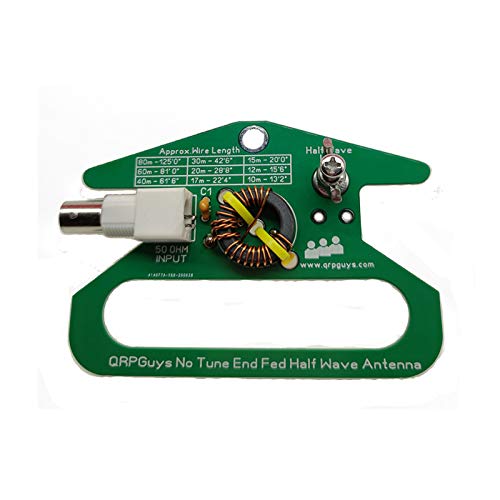
The fundamental concept of the slot antenna branches out into various practical implementations, each with its own unique characteristics and applications:
1. The Simple Rectangular Slot
This is the most basic form, a rectangular aperture in a conductive surface. Its dimensions are critical for resonance, typically with the longer dimension approximating half a wavelength at the desired operating frequency.
2. The Circular Slot
Similar to the rectangular slot, a circular aperture can also be used as a radiating element. Its performance characteristics are analogous to those of a dipole.
3. The Cavity-Backed Slot Antenna
This is a highly popular and practical design for ham radio. A slot is cut into one face of a metallic cavity. The cavity acts as a reflector, enhancing the antenna’s efficiency and providing a degree of directivity. These are often used for VHF and UHF applications and can be quite compact.
Example: A common implementation is a quarter-wave deep cavity with a slot cut into the front panel, fed by a coaxial cable. This design offers a good balance of gain, bandwidth, and physical size.
4. The Annular Slot Antenna

This design features a ring-shaped slot. Annular slot antennas can be useful for achieving specific polarization characteristics and can sometimes offer broader bandwidth than simple linear slots.
5. The Cross Slot Antenna
Composed of two perpendicular slots, often fed with an H-frame structure. This design can be inherently circularly polarized, which can be advantageous for satellite communication or in environments with multipath interference.
Case Study: The Urban Ham and the Discreet Slot Antenna
John, a ham radio operator living in a densely populated urban area, faced significant challenges in erecting traditional antennas due to strict homeowner association rules. His previous attempts with stealthy end-fed wires yielded mediocre results. Frustrated but determined, John researched alternative antenna designs and discovered the potential of slot antennas.
He decided to build a cavity-backed slot antenna designed for the 2-meter band (144-148 MHz). He constructed a simple metal box (the cavity) from readily available aluminum sheeting. A precisely sized rectangular slot was cut into one of the front panels. The coaxial cable was fed through the cavity and connected to the slot’s aperture.
John mounted the cavity-backed slot antenna discreetly on the side of his garage, blending it in with the structure. To his delight, initial testing revealed a remarkably low SWR (Standing Wave Ratio) across the entire 2-meter band, indicating excellent impedance matching. More importantly, his ability to communicate with local and even distant repeaters significantly improved. He found that his transmitted signal was cleaner, and his reception was clearer compared to his previous stealth antenna attempts.
John’s experience highlights a crucial point: the slot antenna, when properly designed and implemented, can overcome significant installation limitations and deliver excellent performance, allowing even urban hams to engage effectively in their hobby.
Practical Considerations for Slot Antenna Implementation
While the advantages are clear, building and optimizing a slot antenna requires careful attention to detail. Here are some key considerations:
- Precision in Dimensions: The size and shape of the slot are paramount. Even minor deviations can detune the antenna and affect its performance.
- Conductive Surface: The material and extent of the conductive surface surrounding the slot are critical. A larger, continuous metallic surface generally leads to better performance.
- Feeding Mechanism: The method of feeding the slot (e.g., coaxial cable, H-frame) significantly impacts impedance matching and efficiency.
- Grounding: Proper grounding is essential for any antenna system, and slot antennas are no exception.
- Testing and Tuning: An SWR meter and antenna analyzer are invaluable tools for fine-tuning the antenna to its desired operating frequency.
Statistics and Performance Benchmarks
While specific statistics for slot antennas in amateur radio are not as widely published as for more common designs, general electromagnetic principles and experimental data provide valuable insights. For instance:
- A well-designed cavity-backed slot antenna can achieve gains of 3-6 dBi, comparable to small Yagi antennas.
- Their radiation patterns are often broadside to the aperture, offering good directional capabilities when desired.
- The efficiency of slot antennas can rival that of dipoles, especially when properly designed and matched.
A study by the IEEE on aperture antennas, though often focused on professional applications, consistently demonstrates the efficacy of slot designs when optimized for specific frequency bands.
The Future of Slot Antennas in Ham Radio

As technology advances, so too do antenna designs. The ongoing development of advanced modeling software and materials science continues to unlock new possibilities for slot antennas. We can anticipate:
- More compact and efficient designs for portable and mobile operations.
- Enhanced broadband capabilities through innovative slot configurations and parasitic element integration.
- Increased integration into everyday objects for even greater stealth and convenience.
The adaptability of the slot antenna concept suggests a bright future for this often-underestimated radiator.
Unlocking the Potential of the Slot Antenna
The slot antenna, with its elegant duality to the dipole, is far more than just a theoretical curiosity. It represents a potent and often underutilized tool in the ham radio operator’s arsenal. Its inherent advantages in stealth, robustness, and polarization versatility make it an ideal solution for a wide range of challenges, from urban installations and portable operations to robust permanent setups. By understanding the fundamental principles, exploring the various types, and paying close attention to practical implementation details, amateur radio enthusiasts can unlock the significant potential of this hidden gem, enriching their communication experiences and expanding their operational horizons.
