In the vibrant world of early childhood education and sensory exploration, few materials offer the unique blend of stimulation and safety quite like fabric panels in children’s cloth books. Far beyond mere aesthetic appeal, these soft, pliable surfaces are powerful tools that engage young minds and bodies in profound ways, fostering cognitive development, fine motor skills, and a lifelong love of reading. This article delves into the multifaceted benefits of incorporating fabric panels into the design of children’s cloth books, exploring the scientific underpinnings and practical applications that make them an indispensable component of early learning resources.
Sensory Symphony: The Power of Touch in Early Development
From the moment of birth, infants begin to understand the world through their senses. Touch, in particular, plays a crucial role in their cognitive and emotional development. Fabric panels offer a rich and varied tactile experience that stimulates nerve endings, promoting sensory processing and awareness. Unlike the flat, predictable surfaces of traditional paper books, fabric panels introduce a delightful array of textures, from the smooth glide of satin to the bumpy resilience of corduroy, the gentle fuzz of fleece, or the cool crispness of cotton. This multi-sensory engagement is not just enjoyable; it’s fundamental for building neural pathways.
Research consistently highlights the importance of tactile exploration in early development. A study published in the journal *Developmental Psychology* found a strong correlation between the richness of sensory input in infancy and later cognitive abilities, including problem-solving and language development. When a child runs their fingers over a fluffy sheep’s wool texture, they are not just feeling “soft”; they are experiencing a specific sensation that their brain processes, categorizes, and stores. This ongoing process of sensory input and interpretation builds a complex understanding of the physical world.
Textures that Teach: Differentiating and Describing

The diverse textures found in fabric panels provide an invaluable opportunity for children to learn about differences and develop descriptive language. Parents and educators can use these variations as springboards for conversation:
- “Feel how soft the bunny’s ear is. It’s like a cloud!”
- “This bumpy road on the truck book feels rough, doesn’t it? Can you say ‘rough’?”
- “The flower petal is smooth and silky. Can you find something else in the room that feels smooth?”
This direct association of tactile experiences with verbal descriptions helps children expand their vocabulary and their ability to articulate their observations. They begin to understand abstract concepts like “soft,” “hard,” “smooth,” and “rough” not just through definition, but through lived experience.
Fine Motor Mastery: Developing Dexterity Through Play
Beyond sensory enrichment, fabric panels are exceptionally effective in cultivating fine motor skills. The act of turning pages, manipulating attached elements, and tracing textures requires precise finger movements and hand-eye coordination. These seemingly simple actions are critical for building the dexterity needed for more complex tasks later in life, such as writing, drawing, and even buttoning clothes.
Consider a fabric book with flaps to lift, ribbons to pull, or small buttons to fasten. Each of these interactive elements presents a mini-challenge that encourages the development of pincer grasp, finger isolation, and bilateral coordination. For instance, a child learning to unbutton a small fabric button on a doll’s dress is practicing a skill that will eventually translate to managing their own clothing. Similarly, the careful maneuvering required to lift a felt flap to reveal a hidden image hones their ability to make small, controlled movements.
Interactive Elements that Engage and Educate

Fabric books often incorporate a variety of interactive elements beyond static textures:
- Lift-the-flaps: These encourage the use of the thumb and forefinger to grasp and lift, building strength and precision.
- Velcro patches: The act of pulling apart and reattaching Velcro enhances finger strength and sensory feedback.
- Zippers and buttons: These introduce more complex motor sequences and problem-solving challenges.
- Peek-a-boo elements: The anticipation and action of revealing a hidden image provide a rewarding tactile and visual experience.
- Tying and lacing: Advanced books might feature laces to thread through holes, significantly developing fine motor control and dexterity.
These activities are not just about repetition; they are about encouraging children to experiment, to persevere when a task is challenging, and to celebrate their successes. This builds confidence and a sense of accomplishment that fuels further learning.
Emotional Resonance: Fostering Connection and Comfort

The softness and comforting nature of fabric panels can also play a significant role in a child’s emotional development. Cloth books are inherently safe and gentle, making them ideal for very young children who may be prone to handling books with less care. The familiar feel of fabric can evoke feelings of security and warmth, making reading a more intimate and comforting experience.
During story time, a child snuggled with a soft fabric book can feel a sense of security and closeness. The tactile familiarity can also be particularly beneficial for children who are anxious or undergoing stressful transitions. The act of stroking the soft fabric can be a self-soothing mechanism, helping them to regulate their emotions and feel more at ease.
A Companion Through Stories
Fabric books often become cherished companions for young children. Their durability means they can withstand the rigors of daily play, and their soft textures make them perfect for cuddling. This emotional connection to a book can foster a positive association with reading, transforming it from a chore into a beloved activity.
A child might develop a particular attachment to a fabric book featuring their favorite animal, with the accompanying soft texture reinforcing their affection. This emotional bond can be a powerful motivator for engaging with the book and the stories it contains, further solidifying their early literacy experiences.
Durability and Safety: A Parent’s Peace of Mind
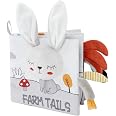
For parents and caregivers, the durability and safety of fabric books are paramount considerations. Unlike paper books that can easily tear or be damaged by drool or chewing, fabric books are designed to withstand the enthusiastic, and sometimes rough, handling of young children. The materials are typically washable, making them hygienic and easy to maintain.
The inherent safety of fabric panels is also a significant benefit. There are no sharp edges, no small parts that can detach and become choking hazards (when properly constructed), and the materials themselves are generally non-toxic. This allows children to explore and interact with the book independently, fostering a sense of autonomy while providing parents with peace of mind.
Built to Last, Designed for Little Hands

The construction of quality fabric books prioritizes longevity:
- Reinforced stitching: Ensures that panels and attached elements remain securely in place.
- Durable fabrics: Chosen for their ability to withstand repeated washing and wear.
- Child-safe dyes: Non-toxic and colorfast, preventing fading and potential harm.
- Absence of small, detachable parts: Eliminates choking hazards for infants and toddlers.
This commitment to quality construction means that a well-made fabric book can be a treasured item that is passed down through generations, offering continued learning and enjoyment.
Beyond the Pages: Encouraging Imaginative Play
Fabric panels in children’s cloth books are not confined to the act of reading; they are powerful catalysts for imaginative play. The textures, colors, and tactile sensations can spark a child’s creativity, inspiring them to invent their own stories and scenarios.
A child might use the bumpy texture of a road panel as a race track for their toy cars, or the fluffy cloud texture as a cozy bed for a stuffed animal. The interactive elements can also fuel imaginative narratives. A flap that reveals a hidden animal might lead to a game of hide-and-seek, or a zipper that opens a pocket might become a treasure chest.
From Passive Reader to Active Creator
Fabric books empower children to become active participants in their play, rather than passive consumers of information. They can:
- Embody characters: By touching the soft fur of a bear panel, a child might pretend to be the bear themselves.
- Create environments: Different fabric textures can represent various landscapes, from a grassy field to a sandy beach.
- Develop storylines: The interactive elements provide prompts and opportunities for children to create cause-and-effect scenarios.
This type of open-ended play is crucial for developing problem-solving skills, critical thinking, and creativity, all of which are foundational for academic success and lifelong learning.
The benefits of using fabric panels in children’s cloth books are profound and far-reaching. From the earliest stages of sensory exploration to the development of fine motor skills, emotional regulation, and imaginative play, these soft, engaging materials offer a unique and invaluable learning experience. The tactile tapestry woven by fabric panels provides a rich, multi-dimensional pathway for young children to understand the world around them, to connect with stories, and to develop essential cognitive and physical abilities. As parents, educators, and creators of children’s literature, embracing the power of fabric panels is an investment in fostering curious, capable, and confident young minds.
